
Your needs, this model
Does it fit your priorities?
What changes when I choose the 1.7 L Reactor system rather than the 1.0 L?
The current US 1.7 L configuration is SKU 14269. MSR describes it as its all-around Reactor size for two or more, with 490 g minimum and 500 g packaged weights on the product page, versus 420 g minimum and 430 g packaged for the 1.0 L. These are maker-listed system figures, not the complete fueled trip load or an actual serving guarantee. The 1.0 L and 2.5 L configurations have their own reviews because capacity, dimensions and weights differ.
Explore this need in the finder →Does the larger 1.7 L pot mean I can cook in a wider or generic pan?
No. Reactor cookware is the only cookware the manual supports with this burner. The official information does not publish a generic cookware diameter ceiling for this configuration, so an 8-inch or other diameter requirement cannot be affirmed from the pot's dimensions. Use the 1.7 L pot's marked maximum fill line, the flat and stable surface rule, and the exact instructions.
Explore this need in the finder →Is the current 1.7 L system the same SKU as the recalled one?
No. Recall 24-126 identifies the older Reactor 1.7 L Stove System SKU 11205 and Reactor 1.7 L Pot SKU 06901; this current US listing variant is SKU 14269 / UPC 040818142691. That exact-code distinction is a bounded check, not a statement that any older pot or mixed package is safe. Verify the SKU and pot identity, then use MSR's current recall instructions if an older recalled item is involved.
Explore this need in the finder →The 1.7 L Reactor is the middle capacity of MSR's current three-size integrated system listing. This assessment is for the exact US 1.7 L variant, SKU 14269 / UPC 040818142691, rather than the older 1.7 L Reactor system identifier that appears in a 2024 pot-handle recall. Its stove, pot and package should be evaluated together: the product page offers one shared product family, while the 1.0 L and 2.5 L versions have different size-specific weights and uses.
A middle pot size with a recall-sensitive lookalike
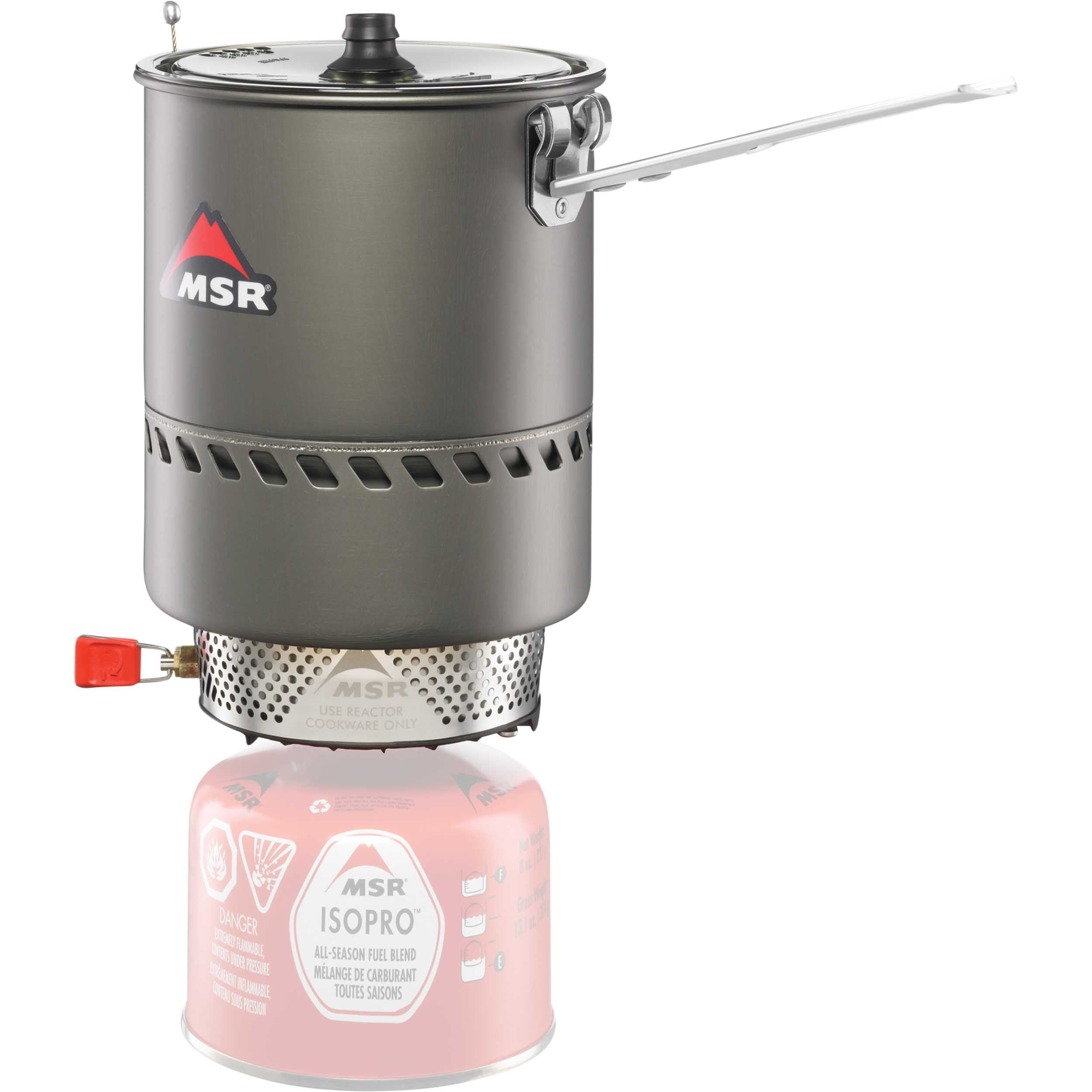
The supplied arrangement includes one Reactor stove, its 1.7 L Reactor pot, a BPA-free strainer lid, a PackTowl protector and a folding, locking handle. The cartridge is not in the package. MSR describes the 1.7 L as an all-around option with capacity to boil water and melt snow for two or more people. That description can help separate it from the smallest Reactor, but it should not be read as an exact meal count or a promise that a larger vessel will suit every group.
Capacity is only one difference among the three current sizes. MSR lists this matched-pot configuration at 5.8 by 5.4 by 6.7 inches, 490 g minimum and 500 g packaged; neither value is a separately stated bare-burner mass. The official variant feed separately carries 493 g without a weight-basis label, and the page's imperial and rounded metric values do not convert exactly. The numeric finder uses the named metric system minimum conservatively and keeps the raw variant number distinct. By comparison, the 1.0 L listing is 420 g minimum and the 2.5 L is 610 g. The cartridge, food, water and personal packing choices add more to the trip total.
What its operating arrangement does—and does not—support
The burner threads onto an MSR 80% isobutane / 20% propane cartridge certified to EN 417. MSR's official FAQ identifies Reactor stoves as threaded, self-sealing canister models. The manufacturer page's product images show an 8 oz cartridge with the 1.7 L version, but fuel is sold separately; check the exact cartridge's label and dimensions against the current manual's canister limits and support directions. A similar connector alone is not enough to establish a safe blend or cylinder.
The manual supports Reactor cookware only. It does not give a generic maximum diameter for the supplied pot or authorize an ordinary pan because it appears to fit the ring. A measured pot dimension is not the same as an approved cookware rule. The manual also identifies a fill line for the 1.7 L pot: stop below it. With one burner, this remains a single-vessel cooking sequence; it does not cook two dishes concurrently. The 1.0 L assessment favors smaller packed dimensions, while the 2.5 L version is the larger snow-melting and group-pot option.
Radiant burner performance with strict setup conditions
MSR's product page reports a three-minute boil time per liter for the 1.7 L and about 22 liters boiled per 227 g IsoPro canister. Those are manufacturer-published planning figures, not a controlled test by this author. Actual conditions vary. The instructions say to adjust heat with the Flame Adjuster, so the matcher records adjustable output; that does not demonstrate a controlled low simmer or an independent cooking result.
The same instructions prohibit non-Reactor cookware and any windscreen, reflector or diffuser. The tall pot-and-canister stack may tip more readily than lower designs, so MSR directs users to a stable, even surface and warns against leaving it unattended. It is for outdoor use only, cannot be operated with an empty/dry pot, and must cool for at least five minutes before it is moved. The manual gives 0°F (-18°C) as the floor for operation or storage and describes a thermal trip that can render the stove inoperable after overheating; service must go through an authorized MSR route.
Do not confuse this SKU with the earlier recalled size
The official MSR and CPSC 24-126 recall materials name an earlier Reactor 1.7 L Stove System SKU 11205 and an earlier Reactor 1.7 L pot SKU 06901. The current listing's code is 14269, so this exact configuration is not the old SKU identified in that notice. It does not follow that any older system with the same pot volume is safe, or that a mixed package has the current handle. Verify the SKU and individual pot code; follow the recall remedy for any named older component.
The 1.7 L Reactor makes most sense when its integrated pot is an intended part of the trip, the specified fuel is available and one burner is enough. It is a heavier, narrower-purpose package than a standalone burner and does not answer a hard generic cookware-diameter or approved-windscreen requirement. Confirm the current manual, exact kit contents and fuel canister before purchase or use.
Key specifications
Key details at a glance
| Manufacturer-listed minimum weight | 490 g |
|---|---|
| Packaged weight | 500 g |
| Burners in one arrangement | 1 |
| Fuel connector | Threaded EN 417 canister connection |
| Specified fuel blend | MSR 80% isobutane / 20% propane |
| Included pot capacity | 1.7 L |
| Fuel canister included | No |
| Adjustable flame | Yes |
| Separate windscreen permitted | No |
| Manual's minimum operating temperature | 0 °F |
Use the exact model’s instructions for operating limits, supplied equipment and version differences.
Sources for this review
Sources for this assessment
- MSR Reactor Stove Systems — official US product page
- Official MSR storefront variant data for Reactor Stove Systems
- MSR Reactor Stove Systems — current English instruction manual #34-434
- MSR FAQ: fuel connection and canister stove guidance
- Cascade Designs / MSR current pot-handle recall notice
- CPSC Recall 24-126: select Cascade Designs camping cooking pots
Compare this stove against your actual setup
Use the finder for a fact-based shortlist, then confirm the exact manual, fuel cartridge and package before use.