
Your needs, this model
Does it fit your priorities?
What separates the Tupike from the lower Kinjia layout?
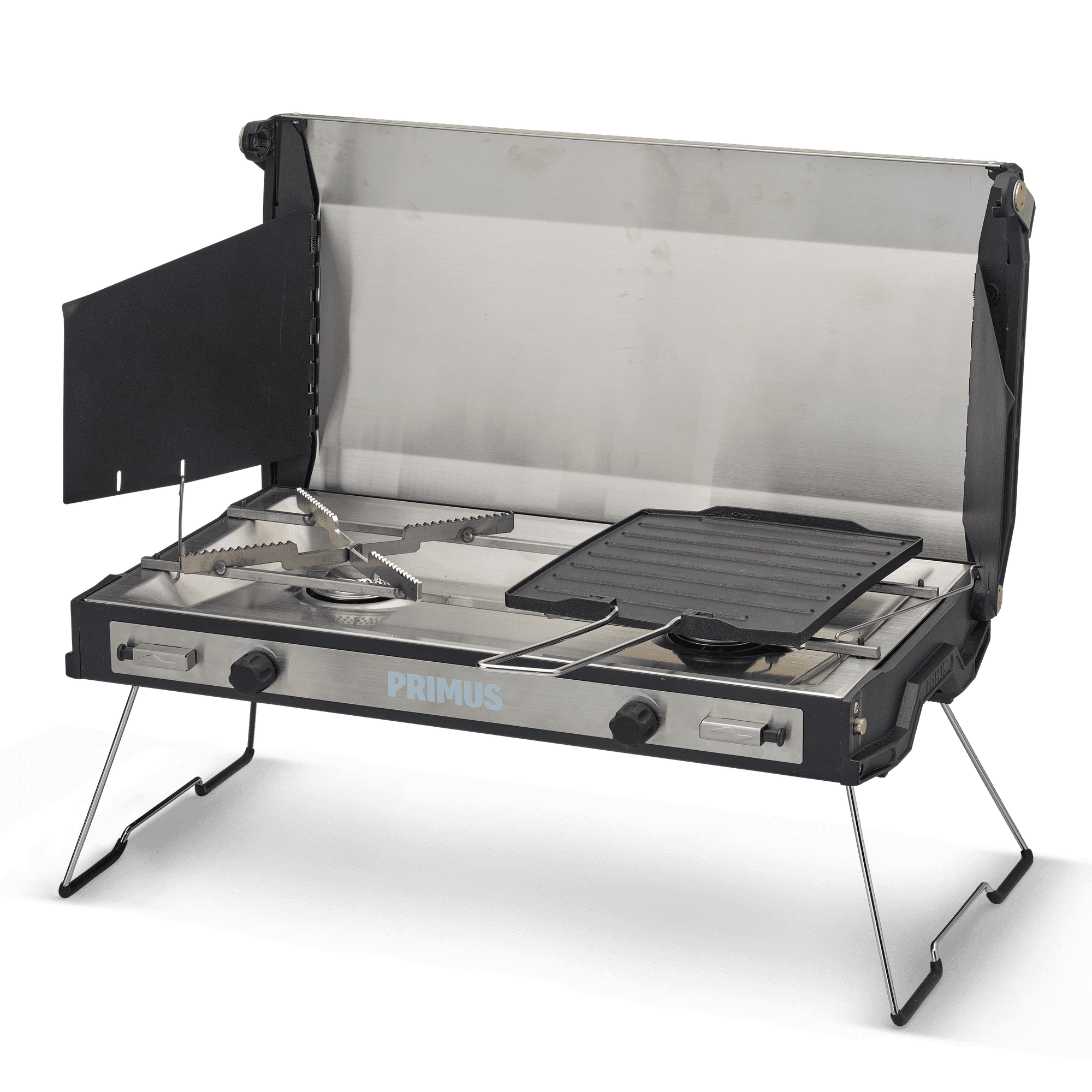
Both are two-burner Primus stoves with separate controls, but the Tupike page describes folding legs, deployable lid/side windshields and a supplied non-stick griddle plate. Those are package/layout differences, not evidence that the griddle is a second burner.
Explore this need in the finder →Does Tupike include fuel and which cartridges does its manual name?
The current US page says gas is not included. The linked Tupike-family manual names Primus 2202xx, 2206xx and 2207xx cartridges and suitable LPG adapters, but its internal model code is 350121 while the listing is P350151. Verify that the booklet matches the unit; the quiz does not treat these as MSR 80/20 or JetPower fuel.
Explore this need in the finder →Can I fit a specific large pot or add another windscreen?
Primus describes built-in lid and side shields, not approval for an extra separate screen. No maximum cookware diameter is stated for this listing. Its 4300 g table value is also not defined as the manufacturer's minimum stove weight.
Explore this need in the finder →Scope: This source-based assessment covers the Primus US Tupike listing, article P350151 / UPC 7330033911336. I did not own, set up, weigh, ignite or cook on the stove. The product listing currently labels this exact page variant sold out; that observation is not an availability forecast. Its linked manual is labeled Tupike 350121, so confirm the booklet supplied with any specific retail unit.
Two burners plus a raised setup option
The Tupike's distinguishing idea is a two-burner tabletop stove whose folding legs can raise it above the table, then fold for storage. Primus describes two independently controlled burners for separate pots at different temperatures, built-in side and lid windshields, and piezo ignition. If a camp meal involves holding a sauce while another pot boils, this is a more relevant arrangement than a single-burner kit. The manufacturer's language about simmering describes intended adjustment, not an independent flame-control test or a promise that every pan will hold a low heat evenly.
The current US product page also says a non-stick griddle plate comes with the Tupike. It adds a griddle surface for direct cooking tasks but does not create a third burner or prove that the plate can be used at every heat setting. Check the exact package contents on the offer. The page lists a body width of 475 mm, depth of 295 mm and height of 82 mm; when the legs are raised, allow room for their footprint and for the windscreens and lid to open. The supplied cooking surfaces still need a flat, stable tabletop with enough clearance from nearby materials.
Check the manual code and output figures rather than picking a favorite number
Primus' exact US listing identifies SKU P350151, describes 3000 W and 215 g/h in its table, and shows a 4300 g table weight. Its narrative speaks of a 10,200 BTU / 3000 W flame. The linked Tupike family manual identifies model 350121 and gives a 3.5 kW / 250 g/h specification. These differences are manufacturer-to-manufacturer-document conflicts, not independent tests. There is no basis to average the numbers or present them as measured field output. The weight is not identified as minimum, packed or complete carried mass.
The manual's model code, 350121, is not the same string as the US article SKU P350151. Primus links it by product family from its US manual index, which is useful provenance, but the saved sources do not show a formal crosswalk. Read the actual manual and safety label that accompanies a particular unit before connecting fuel. This matters most when an older used unit, replacement hose or adapter is being considered.
Integrated windshields are not a license to add a screen
The Tupike's lid and side shields are part of the designed cooking geometry. They fold out with the stove and help explain its wind-management claims. However, the linked manual does not document adding a separate external windscreen. A request for an explicitly approved separate screen is a different requirement from wanting this stove's built-in panels. The conservative reading is to use only the supplied design, not to wrap it in foil or build a wall around the burners or fuel. The manual also says to use the stove outdoors, on a stable surface, and to keep substantial clearance to walls and overhead structures; verify the instructions for the exact item before use.
The page says gas is not included. Its family manual names Primus 2202xx, 2206xx and 2207xx cartridge series and describes a suitable LPG adapter option. Those brand/model references are not interchangeable with any cartridge that happens to screw on, and the questionnaire does not claim the Tupike is an exact MSR 80/20 or JetPower match. Keep the cartridge away from heat, check seals and connections outdoors, shut off the flame before disconnection, and let supports, drip tray and griddle cool before packing. Never operate a stove in a tent, vehicle or dwelling.
Differences from Kinjia, Alika and Moja
The Kinjia P350142 is the closest same-purpose comparison: two regulated burners in a compact case, but no folding legs or griddle in its assessed US configuration. The Alika P350163 has differently sized burners, a removable lid, and a larger stated cooking surface, while its output table and manual disagree. For a one-pan setup, the lighter-bodied Moja P350173 keeps adjustable cooking but provides only one burner. These are package and layout differences, not a tested ranking.
Who should compare P350151
The Tupike is worth comparing if the legs, independent burner controls, built-in windshields and griddle plate meet a real basecamp routine. It is a weaker fit when the required criterion is a single weight limit, a known cookware ceiling, or an independently permitted external screen. Before purchase, confirm P350151 rather than a similarly named spare or accessory; ask which manual edition, griddle and supports are in the box; and verify the exact fuel and adapter instructions for the unit. The listing's sold-out label and any price or delivery estimate may change, so this review makes no stock or offer claim.
Key specifications
Key details at a glance
| Burners in one arrangement | 2 |
|---|---|
| Fuel connector | Primus threaded cartridge or model adapter |
| Specified fuel blend | Primus cartridges 2202xx 2206xx 2207xx |
| Push-start ignition | Yes |
| Adjustable flame | Yes |
Use the exact model’s instructions for operating limits, supplied equipment and version differences.
Sources for this review
Sources for this assessment
Compare this stove against your actual setup
Use the finder for a fact-based shortlist, then confirm the exact manual, fuel cartridge and package before use.