
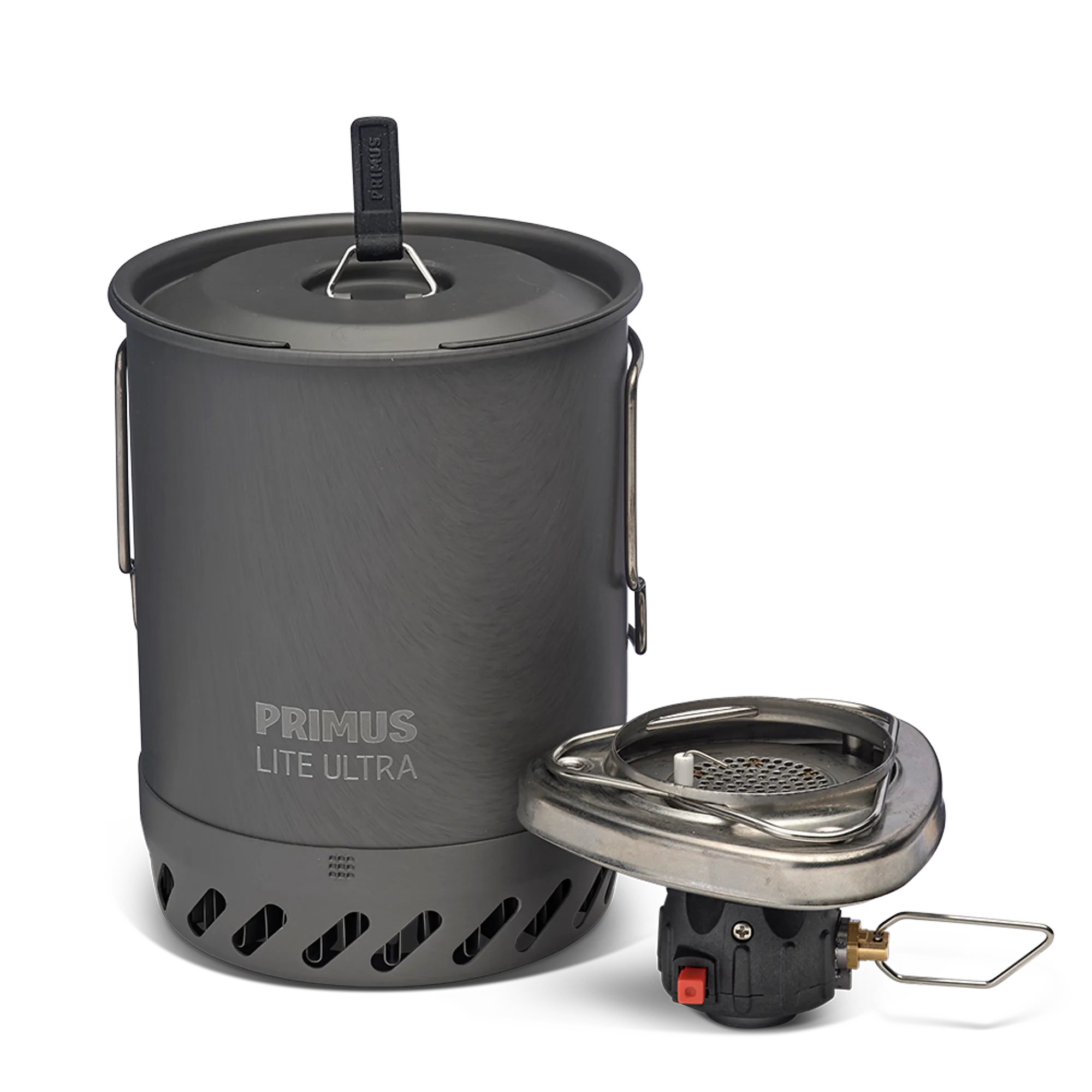
Your needs, this model
Does it fit your priorities?
Does the 0.8 L label mean I can fill the pot with 0.8 L to boil?
No. For P356044 the linked 3560 manual names a 0.8 L pot but tells the user to fill with no more than 0.5 L water; a larger fill or other liquids risk boil-over. The product capacity label is not a safe fill limit.
Explore this need in the finder →Can I place a separate windscreen around the Lite Ultra?
No match for that requirement. The exact 3560 manual says never cover the stove or gas cartridge with wind shields, rocks or similar; it instead advises positioning the stove out of wind where possible.
Explore this need in the finder →Is 240 g a manufacturer's bare-stove minimum?
The US listing describes 240 g as burner plus pot, and does not state a minimum-weight or complete trip-load basis. The manual also requires a separate Primus 2206 cartridge; fuel, cookware usage and the packaged pieces should be checked for the actual carry plan.
Explore this need in the finder →The Lite Ultra Stove System 0.8 L (P356044) is a compact, integrated one-burner canister setup whose small matched pot matters as much as the burner. Primus positions it for light travel by hikers and climbers who mainly boil water, warm soup or prepare simple meals. The exact US listing identifies the article number but displays no UPC. This assessment compares manufacturer sources; I did not use the stove, measure its mass or run a boil test.
A small system with a real fill boundary
The US product page describes a 0.8 L hard-anodized aluminum pot with heat exchanger, low-profile lid, titanium handles, built-in piezo ignition, Lite-series pot supports for other cookware and a storage bag. Fuel is separate. The 0.8 L label is not the manual’s safe water-fill amount: the P356044-linked 3560 manual identifies the supplied 0.8 L pot and says to use no more than 0.5 L water. It cautions that overfilling the pot or heating a liquid other than water can create a boil-over risk. That is an important practical distinction for anyone comparing system capacity with a drink-sized boil.
The small capacity and compact burner-pot relationship make more sense for a simple solo meal or two-person hot-drink stop than for simmering a large shared pot. Manufacturer text says it is designed for one to two people, but that is not a measured portion estimate. The pot locks onto the burner; the manual calls for supplied supports when another pot is used, and explicitly warns against setting an ordinary pot directly on the burner without them. An alternate vessel may add flexibility, but the material reviewed does not give a maximum cookware diameter or load rating.
What the weight and wind claims mean
Primus describes the system as 240 g for burner plus pot. That useful package comparison is not a bare burner weight, a manufacturer-labeled minimum weight or a complete fueled carry load. The canister is sold separately, and the product page does not define the mass of every bundled piece as a single minimum-weight configuration. The finder therefore leaves its strict minimum-weight field unknown instead of treating the appealing product figure as a guarantee.
The page highlights a low-profile Laminar Flow Burner and claims stable, wind-resistant cooking. The instruction manual still recommends placing the stove out of the wind when possible. More importantly, it says not to cover the stove or cartridge with a wind shield, rocks or similar items because of overheating risk. That is a direct limitation: this is not an arrangement for someone who requires a manual-approved separate screen. Do not confuse the integrated pot architecture or a product-page wind-resistant phrase with permission to wrap the canister.
Fuel and controls
The linked 3560 manual specifies a Primus propane/isobutane/butane mix cartridge numbered 2206 only. The exact US page says fuel is not included. The instructions do not establish the questionnaire’s MSR 80/20 fuel option, its exact blend, or the Jetboil JetPower blend; a seemingly compatible threaded connection alone cannot establish the right gas. Verify the exact canister and seals for the unit and location.
The manual describes lighting with the integrated piezo button and adjusting flame by turning the burner valve, so the product has maker-documented adjustable output. That is why it appears in the finder’s adjustable-heat results. It is not a claim of independently tested simmer stability, evenness or minimum-flame performance. The matched pot and small volume may suit simple warming and water tasks; a cook who needs repeatable low-heat control should check model-specific expectations and not rely on a marketing label alone.
Use the exact manual, not a generic screen workaround
The 3560 manual requires outdoor use, upright placement on a stable surface, at least 1,000 mm to the roof and 500 mm to walls, outdoor cartridge changes and leak checks, and cartridge disconnection for storage. Do not light it in a tent, vehicle, home or other enclosed space. The same manual warns against moving a lit stove, overheating a dry pot and touching hot components before they cool. These instructions matter more than the convenience of the compact packed shape.
The manual says other cookware can be used in an emergency with its supplied pot supports, but it gives no diameter ceiling. A burner-to-pot fit claim or pot volume does not answer whether a specific broad pan is safe. Do not use the visible pot supports as a measurement substitute.
Bottom line
P356044 is a focused choice for carrying a small matched system when the planned meal fits a 0.5 L maximum water fill. Its burner, pot and supports form a compact package; its limits are also concrete: the specified 2206 Primus cartridge, no approved wind shield, one cooking position, uncertain strict minimum-weight status, and no documented maximum pan diameter. Check the P356044 package and manual, especially the fill instruction, before choosing a seller’s offer. This is a source-based comparison rather than a personal field review, kitchen trial, measurement or boil test.
Key specifications
Key details at a glance
| Burners in one arrangement | 1 |
|---|---|
| Fuel connector | Primus 2206 mix cartridge connection standard unspecified |
| Specified fuel blend | Primus propane isobutane butane mix 2206 |
| Included pot capacity | 0.8 L |
| Adjustable flame | Yes |
| Separate windscreen permitted | No |
Use the exact model’s instructions for operating limits, supplied equipment and version differences.
Sources for this review
Sources for this assessment
- Primus US Stoves collection, page 1 observed-card snapshot
- Primus US Lite Ultra Stove System 0.8 L exact product page
- Primus US exact Lite Ultra P356044 product record
- Primus official P356044 product page linking the Lite Ultra user manual
- Primus Lite Ultra instructions, model family 3560 / document 25528/0
- US CPSC recalls and product-safety warnings database
Compare this stove against your actual setup
Use the finder for a fact-based shortlist, then confirm the exact manual, fuel cartridge and package before use.