
Your needs, this model
Does it fit your priorities?
Is Express Spider one burner or a group cooking appliance?
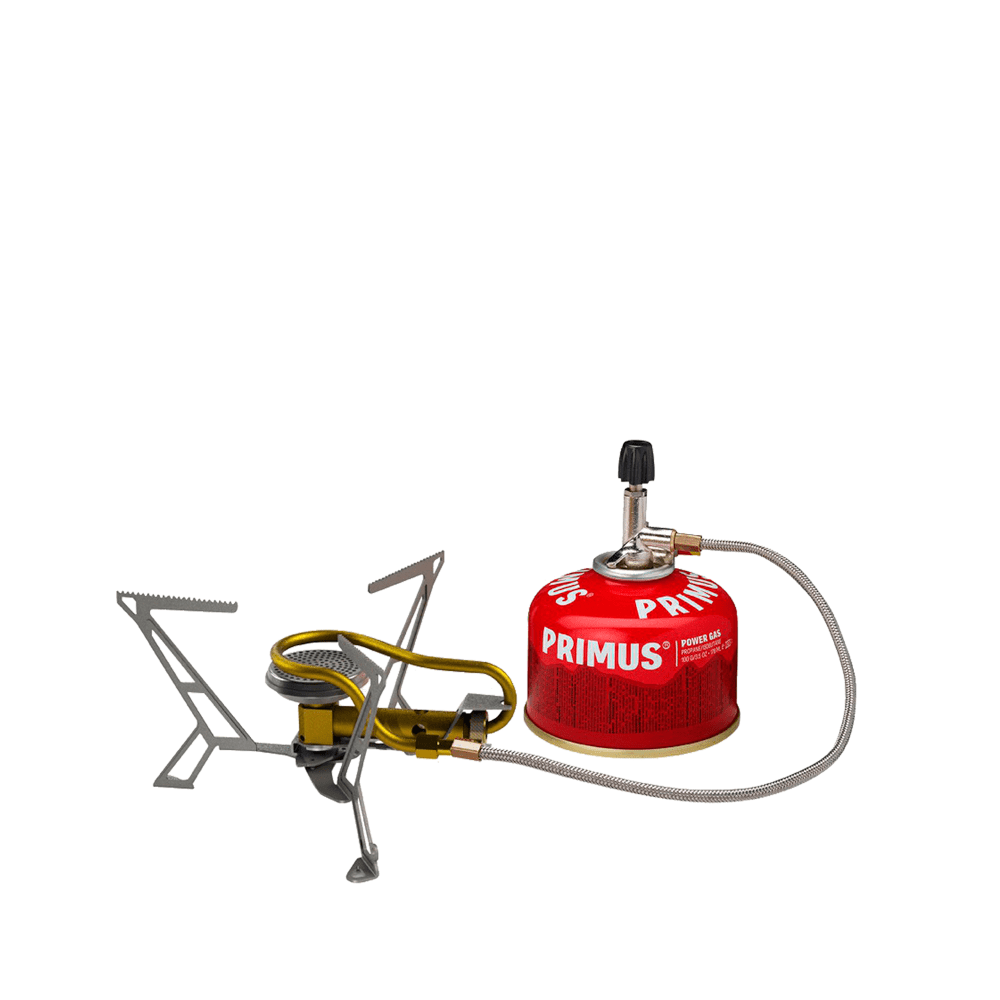
The exact configuration is a single remote-canister burner. Primus describes a narrow flame and a compatibility advantage with its PrimeTech heat-exchanger pots; it does not include a pot or fuel. The optional Spider MultiFuel Kit is a separate conversion accessory.
Explore this need in the finder →Can I use a separate windscreen or demand a particular pot width?
The ID 3284 manual says never cover the stove or gas cartridge with a windscreen, stones or similar. Primus documents no maximum cookware diameter for this configuration, so no numeric width is asserted.
Explore this need in the finder →How should I interpret the page's weight and performance numbers?
Primus lists 200 g and a 4-minute table result, but its page narrative says five minutes and the manual lists about 2.2 kW/160 g per hour compared with the page table's 2.0 kW/145 g per hour. None is an independent measurement, and the weight is not labelled minimum or package-complete.
Explore this need in the finder →Scope note: This is a source-based assessment of Primus US SKU P328485 (UPC 7330033901610), not a field review. I did not use, weigh, ignite or time this stove. The reviewed package is the Express Spider canister configuration; the optional Spider MultiFuel conversion is a separate product.
A remote-canister layout with a narrow-flame emphasis
Express Spider separates the burner from the fuel canister with a hose and preheating coil. That layout lowers the burner above the ground instead of balancing a pan on a canister-top burner. The US product page calls the flame narrow and describes compatibility with Primus PrimeTech pots that have heat exchangers. Those are manufacturer claims, not proof that any particular pot is stable or that cooking will be more efficient in a particular wind. The page lists the stove, a heat reflector and nylon storage bag; it explicitly says gas is not included. A picture of an attached cartridge is not evidence that fuel is part of the box.
The control is described as attached to the gas canister, and the product page says its preheating coil helps in colder conditions. That is a useful arrangement to compare with a small top-mounted burner, but it does not make cold-weather use automatic: the manual's exact cartridge instructions and operating precautions still govern. One burner can boil or cook with one pan at a time; the brand's separate four-person stove layouts are not what this compact SKU supplies.
Do not turn conflicting maker figures into a test result
Primus' page has a real inconsistency: the narrative says one liter in five minutes, while the specifications table lists four minutes. It lists 2,000 W, 145 g of fuel per hour and 200 g. The exact product page presents these as specifications, not our measurements. Primus' manual index links a model 3284 manual that gives approximately 2.2 kW and 160 g/h, adding a second mismatch. These are not numbers to average or compare as though they came from the same independent test. The 200 g is also not labelled as minimum weight, packaged weight or complete carried load, so it cannot support a strict minimum-weight shortlist.
The product description notes that a Spider MultiFuel Kit can convert certain Spider stoves to liquid fuel. That accessory is not supplied with P328485, and this assessment does not merge its bottle, pump, jets or fuel modes into the canister stove. If considering the conversion for an existing unit, check its compatibility and exact date/model language on the kit page rather than assuming every earlier Spider has the same fittings.
Screen and safety boundaries matter more than the “Spider” name
The model 3284 manual says to use specified Primus cartridge codes 2202, 2206 and 2207, and warns against other cartridge types. It also requires outdoor use and at least 500 mm clearance to flammable material at the ceiling and walls. Most importantly for an exposed site, the manual says never to cover the stove or LP cartridge with a windscreen, stones or similar objects because overheating can damage the equipment and create a serious hazard. The product's heat reflector is not permission to wrap the burner or canister in a homemade wind barrier.
For a cooking plan, set the stove on its level ground protection, fully extend the hose toward the canister, keep fuel away from the hot burner, and follow the manual's lighting, leak-check, shutdown and cool-down directions. Do not move it while lit or leave it unattended. The manufacturer's claims that it is stable and performs in cold temperatures are not substitutes for a firm surface, compatible cookware and the manual's clearances. Primus does not give a maximum pot diameter on the reviewed page, so the visible stand dimensions cannot be turned into a safe pan-size limit.
Who should compare this configuration
Express Spider is worth comparing if you specifically want a remote-canister, one-burner layout, Primus' narrow-flame description and an optional—not included—liquid-fuel conversion path. It is a poorer fit if your must-have is an approved external windscreen, a documented maximum cookware diameter, a verified minimum-weight cap, or a ready-to-use liquid-fuel kit. Read the US product listing and the exact 3284 manual before buying or using an offered unit. Product-page availability and claims can change; this review does not report stock, price or hands-on performance.
Key specifications
Key details at a glance
| Burners in one arrangement | 1 |
|---|---|
| Fuel connector | Primus lp cartridge |
| Specified fuel blend | Primus powergas 2202 2206 2207 |
| Adjustable flame | Yes |
| Separate windscreen permitted | No |
Use the exact model’s instructions for operating limits, supplied equipment and version differences.
Sources for this review
Sources for this assessment
Compare this stove against your actual setup
Use the finder for a fact-based shortlist, then confirm the exact manual, fuel cartridge and package before use.