
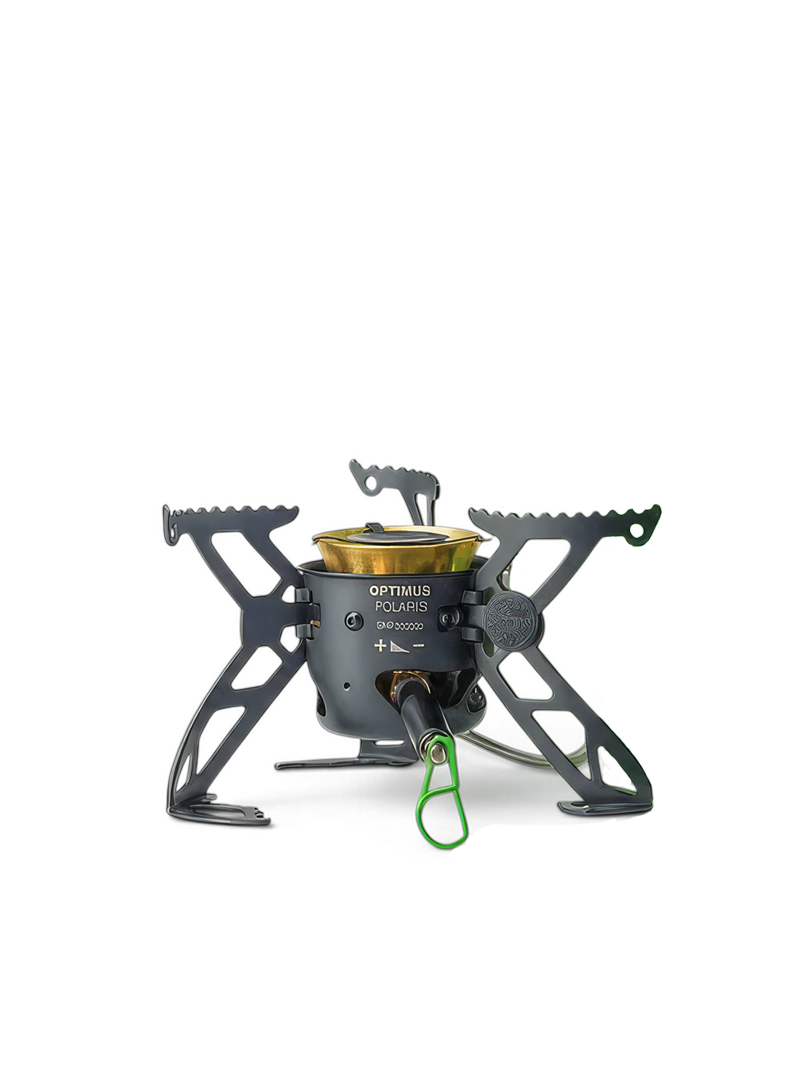
Your needs, this model
Does it fit your priorities?
Which fuels does the exact Polaris Optifuel SKU 8019229 support?
The English manual supports Optimus threaded EN 417 butane/propane canisters up to 450 g. Its remote pumped-fuel mode is for the named petroleum fuels (white gas, gasoline, kerosene, diesel or jet fuel) with an Optimus bottle; it excludes alcohol fuel. Neither plan establishes the exact MSR 80/20 or Jetboil JetPower cartridge blend, so those named-fuel choices are not matches.
Explore this need in the finder →How large or heavy may Polaris cookware be, and how does its screen change setup?
The Polaris manual sets a maximum 220 mm / 8.5-inch diameter and a 4 kg limit for pan plus food. The Optimus windscreen is permitted when adjusted to the pot with a 25 mm / 1-inch air gap; the canister or fuel bottle stays outside the screen, which is placed only after lighting. A 9-inch pot exceeds the manual limit.
Explore this need in the finder →What is the Polaris weight for a one-burner carry cap?
The manufacturer sheet distinguishes 330 g without the pump from 475 g with the pump. The finder compares the 330 g stove-only minimum, above its configured maximum 300 g cap, so this exact model cannot meet any valid weight answer; the 475 g figure is a pump-equipped stove assembly, not the boxed or complete fuel/cookware weight.
Explore this need in the finder →Does Polaris simmer and boil like a tested stove?
Its manual documents an adjustable valve and recommends upright vapor-feed canister operation for simmering. Manufacturer literature estimates around four minutes per liter on canister gas and 3.4 minutes on white gas depending on conditions; these are maker claims, not independent timing or a measured low-flame test. Published canister-power values conflict across official sources, so the review does not present a settled gas-mode wattage.
Explore this need in the finder →Research-based review · exact model: SKU 8019229
The Polaris Optifuel stands apart from the light top-mounted stoves elsewhere in this library because it can run either from a threaded gas cartridge or a pumped liquid-fuel bottle. That makes it a plausible choice when the ability to change fuel systems matters more than compact carry weight. It is not a quick, featherweight burner: the manufacturer lists 330 g without the pump and 475 g with it, before fuel, cookware or other gear.
One burner, three documented ways to feed it
The English manual describes upright vapor-feed use with an Optimus EN 417 cartridge, an inverted-canister liquid-feed mode, and a pump-and-bottle arrangement for named liquid fuels. In ordinary gas use the manual recommends the upright setting for simmering. For colder conditions, low canister pressure or a faster boil, it describes an inverted mode—but only after starting upright and letting the stove burn for 30 seconds. The manual also warns about flare-ups when switching and about fuel leaks in freezing temperatures; the O-rings can stiffen. These are procedures to study before a trip, not modes to improvise from a product photo.
The liquid-fuel path is different work. It needs the pump, an Optimus bottle, pressure, priming and careful leak checks. The manual names white gas, gasoline, kerosene, diesel and jet fuel, limits liquid use to petroleum-based fuels and says not to mix fuels. It does not authorize alcohol fuel or arbitrary adapters. The standard 8019229 fact sheet lists the pump and maintenance items but not a fuel bottle. Do not assume the separately named 8019408 package or another bottle is included with this SKU.
For canister mode, the manufacturer specifies Optimus threaded EN 417 cartridges up to 450 g. Although the connection is threaded, the available Polaris sources do not establish the exact MSR 80/20 or Jetboil JetPower blend. The finder therefore does not count this as either branded fuel system.
Cookware and windscreen rules matter
The exact manual caps cookware at 220 mm (printed as 8.5 inches) and the combined pan-plus-food load at 4 kg. This is a maker limit, not a guarantee that every pan base, handle or full pot will clear the hose, support legs and ground. The manufacturer-recommended Optimus windscreen may be used, but fit the screen to the pot with a 25 mm (1-inch) gap for airflow; keep the canister or fuel bottle outside its perimeter; and place the screen carefully only after lighting. The manual prohibits non-Optimus windscreens and heat reflectors. A larger pan, enclosed fuel container or improvised screen is not an acceptable shortcut to the advertised multi-fuel flexibility.
What the weight and performance numbers do—and do not—say
The 330 g minimum is specifically the stove without its pump; the manufacturer lists 475 g with the pump. Liquid-fuel use depends on that pump, while the fuel bottle, liquid fuel and cookware add further carried weight. A full package weight is not stated. Even at its bare-stove figure, this model exceeds the finder’s 300 g maximum, so it is absent from every hard carry-cap match.
Published gas output is not consistent across the manufacturer’s own sources: the US product page gives 4,200 W without naming a mode, the English manual lists 3,300 W for canister gas, and the fact sheet lists 5,300 W for gas. Both the manual and fact sheet list 4,200 W for white gas/liquid fuel. Because those canister numbers conflict, this review does not choose one or use it as a performance ranking. The fact sheet estimates about four minutes per liter on gas and 3.4 minutes on liquid fuel, depending on conditions, and up to 105 minutes from a 230 g cartridge or 100 minutes from 400 ml of liquid fuel at full output. Those are manufacturer claims, not independent boil tests. The valve is adjustable, but no hands-on test here establishes how steadily it holds a low simmer.
The integrated magnetic cleaning needle and included multitool give the owner service tasks to learn; they are not a substitute for the manual’s fuel, pressure and preheating checks. This configuration has no documented push-button piezo igniter, so a separate lighting tool is required.
Who may find the tradeoff worthwhile
Consider this model only if its two fuel systems solve a real resupply or cold-weather problem and you are willing to carry and maintain the pump-equipped setup. A lighter canister-only stove may make more sense for routine short trips; the Polaris’s documented strength is the option to move between a specific canister mode and a specific pumped-fuel mode. That flexibility comes with fuel-specific handling, a 220 mm cookware ceiling and significant carry mass.
This is a source-based assessment, not a hands-on review. The exact US-locale manufacturer page identifies SKU 8019229 but offers an inquiry action; no price, retailer stock or current availability is claimed. Manufacturer output sources disagree, and all boil and burn times above are their own conditional estimates. Check the exact package, included equipment, fuel and current safety instructions before purchase or use.
Key specifications
Key details at a glance
| Manufacturer-listed minimum weight | 330 g |
|---|---|
| Burners in one arrangement | 1 |
| Fuel connector | Mode-dependent-threaded-en417-or-pressurized-bottle-pump |
| Specified fuel blend | Optimus en417 butane-propane canister mix or named petroleum liquid fuels, depending on mode |
| Maximum cookware diameter | 8.5 in |
| Push-start ignition | No |
| Adjustable flame | Yes |
| Separate windscreen permitted | Yes |
Use the exact model’s instructions for operating limits, supplied equipment and version differences.
Sources for this review
Sources for this assessment
Compare this stove against your actual setup
Use the finder for a fact-based shortlist, then confirm the exact manual, fuel cartridge and package before use.