
Your needs, this model
Does it fit your priorities?
Which fuel is supported by the Optimus Crux Lite, SKU 8019259?
Optimus says to use only its gas cartridges complying with EN 417, with the exact manual describing a butane/isobutane/propane mix and a 450 g maximum cartridge. The sources do not establish either MSR’s 80/20 blend or Jetboil JetPower as the exact supported fuel, and they do not authorize bulk propane, an adapter or a different cartridge family.
Explore this need in the finder →Can the Crux Lite use a larger pan or a separate windscreen?
The shared Crux/Crux Lite manual permits cookware to 220 mm (printed as 8.5 in) for general use without a screen. With the separate Optimus Clip-On Windshield, use no pot wider than 130 mm, leave about 10 mm clearance and mount the screen before lighting. The conservative screened finder value is 5 inches; neither permission extends to a non-Optimus shield.
Explore this need in the finder →What is the Crux Lite’s listed weight and how does it compare to the Crux?
Optimus’s model-specific Crux Lite factsheet gives 72 g for the stove alone, 11 g below its 83 g folding Crux figure. The Lite removes the folding head mechanism, so it has a less flat packed profile; the figure does not include the fuel, cookware or your carry accessories.
Explore this need in the finder →This assessment covers the standalone Optimus Crux Lite stove, exact SKU 8019259, using the manufacturer’s current listing, model factsheet and the shared Crux/Crux Lite instructions. It is not based on a field test or a scale reading. The Lite’s defining trade is simple but easy to misread: it saves 11 g against the folding Crux by removing the fold mechanism, so the lighter stove takes a taller shape in a pack.
Where the weight saving comes from
Optimus lists the Crux Lite at 72 g stove-only and specifies a 3,000 W burner. Its factsheet gives a 71 × 57 × 56 mm body dimension (the US product page lists the corresponding length, width and height as 71 × 56 × 57 mm). The one-millimeter axis-order difference appears to be a presentation convention, not evidence of another SKU. The product page says the regular Crux is 11 g heavier because it folds; that is the manufacturer’s comparison, not a measured head-to-head result.
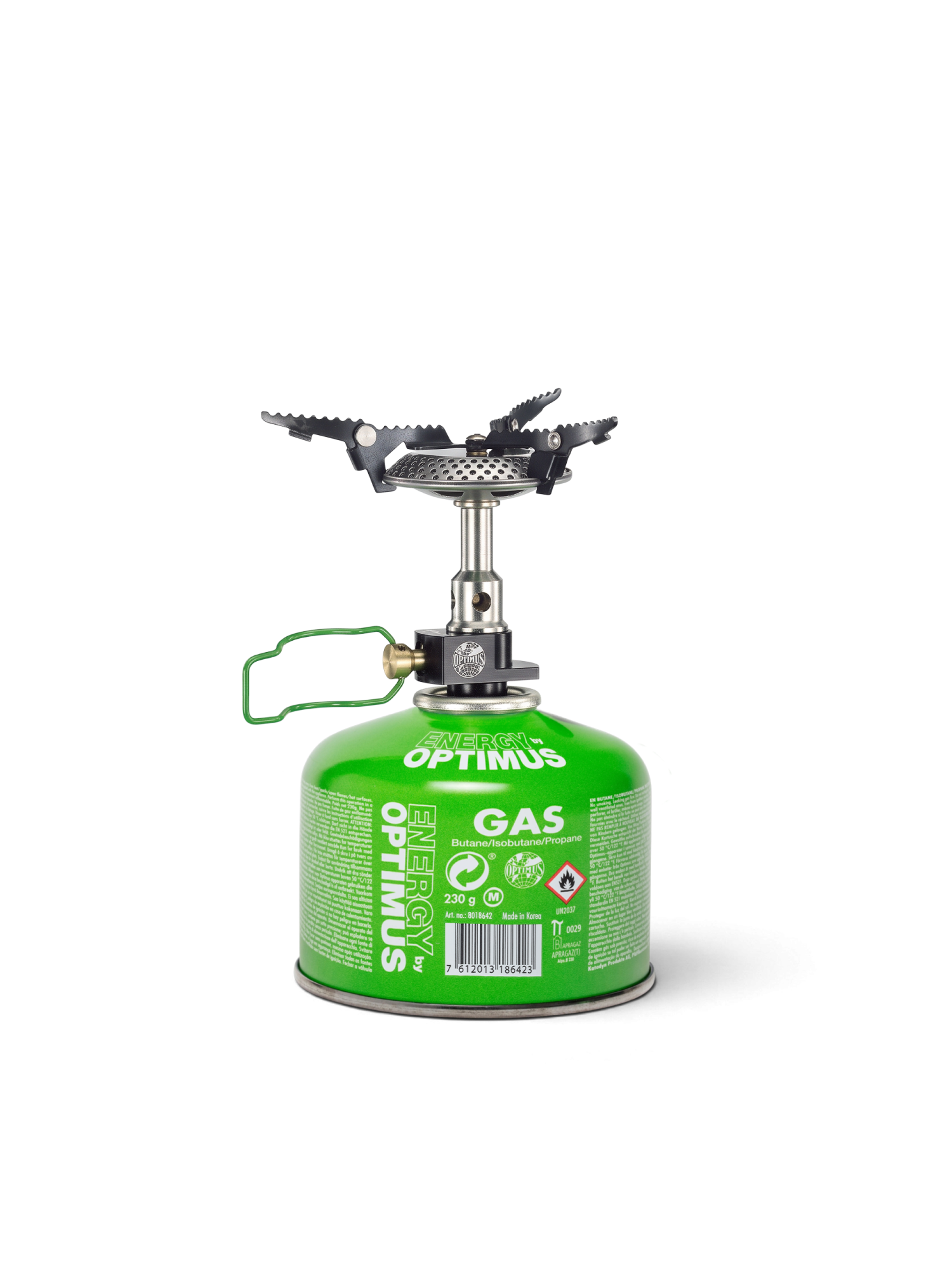
The lighter mass is useful only if the nonfolding head fits how you pack. Crux Lite is less flat than the Crux when stowed, though Optimus says it can nest into unused cookware space. The official image shows the burner mounted to a separate Optimus gas cartridge. The canister is not part of the burner’s 72 g stove-only figure, and the photo does not establish package contents. Treat fuel, cookware, any screen and the rest of the trip load as separate planning items.
Fuel and operation are not universal
Optimus says to use only its gas cartridges compliant with EN 417. The shared English manual describes a butane/isobutane/propane mix, requires the correct threaded cartridge and sets a 450 g maximum. It does not state a precise ratio for US fuel, so the EN 417 connector alone is not a basis for tagging MSR 80/20 or Jetboil JetPower as exact supported blends. Do not substitute bulk propane, an adapter or a cartridge with an unverified valve and fuel label.
The manual describes a direct-pressure, single-burner stove with an adjustable control valve. Optimus publishes an approximate one-liter boil in about three minutes and up to 90 minutes at full output from a 230 g canister. Those are manufacturer figures, not a guarantee for a particular pot, wind, altitude or temperature. The company presents the wide burner as distributing heat; this can make the Lite a more flexible one-pot choice than a boil-only design, but it does not turn the stove into two cooking positions or establish a tested simmer range.
Before each use, inspect the O-ring at the canister connection. The manual asks for a horizontal, stable surface and warns that O-rings may stiffen and leak below freezing. It gives no numeric minimum-temperature rating for this configuration, so the right advice is caution rather than a made-up cold rating. Check for a leak and stop using the stove if the seal is damaged, it smells of gas or it fails to operate normally.
Pot size and windscreen rules
The shared manual sets a 220 mm maximum cookware diameter, printed as 8.5 inches, and a 2 kg maximum for pan plus food. The inch value is rounded and slightly below a direct conversion of 220 mm; for general use without a separate screen, this assessment retains the manual’s stated imperial figure. This is a maximum, not a promise that every pot below it will be stable. Center the cookware, follow the surface instructions and do not leave empty or dry cookware on the flame.
A separate windscreen is not a generic permission. Optimus documents its own Clip-On Windshield for Crux and Crux Lite, with instructions to mount it before lighting, leave about 10 mm between the shield and pot, and limit the pot to 130 mm diameter for that arrangement. The manual warns against non-Optimus reflectors or screens and against fully enclosing the canister. The site’s single-value cookware comparison uses the conservative 5-inch step for Crux-family entries when screened use is required; the manual’s 8.5-inch limit applies only to the general no-screen setup. A small burner lip or a sheltered campsite is not an invitation to wrap foil around the stove. If you require a larger shielded cooking vessel, choose a stove whose exact instructions support it.
Is it the right version?
Crux Lite is a plausible choice for a lightweight one-pot routine where the user values the lowest listed stove-only mass and accepts the taller, fixed head. Choose the folding Crux instead when a flatter packing shape matters more than 11 g. The separate Crux Lite Piezo package adds a handheld igniter, but it is a different package and the manufacturer does not give its total set weight. Those are real differences to check against the SKU, not cosmetic names to collapse into one listing.
The strongest use case is a solo or compact cooking plan that can use the exact Optimus cartridge and keep cookware inside the manual’s size and load limits. The weak case is multi-pan cooking, a broad pan with the approved shield, or a trip where local fuel supply requires an unsupported canister. Read the exact manual in full, use the appliance outdoors in open air, keep combustibles and flammable vapors clear, cool it before moving it, and store the stove disconnected from the canister. The manufacturer’s product page shows an inquiry action rather than a verified stock listing, so this review makes no availability or price promise.
Key specifications
Key details at a glance
| Manufacturer-listed minimum weight | 72 g |
|---|---|
| Burners in one arrangement | 1 |
| Fuel connector | Threaded EN 417 canister connection |
| Specified fuel blend | Butane isobutane propane mix unspecified ratio |
| Maximum cookware diameter | 5 in |
| Push-start ignition | No |
| Adjustable flame | Yes |
| Separate windscreen permitted | Yes |
Use the exact model’s instructions for operating limits, supplied equipment and version differences.
Sources for this review
Sources for this assessment
- Optimus / Katadyn Stoves collection, US public route
- Optimus Optimus Crux Lite product page, exact listed package SKU 8019259
- Optimus Optimus Crux Lite model-specific fact sheet
- Optimus Crux / Crux Lite / Elektra FE official manual; English section
- Katadyn Optimus regulatory resources / CPSC recall scope check
Compare this stove against your actual setup
Use the finder for a fact-based shortlist, then confirm the exact manual, fuel cartridge and package before use.