
Your needs, this model
Does it fit your priorities?
Which fuel is supported by the Optimus Crux, SKU 8019260?
The shared Optimus Crux / Crux Lite manual specifies Optimus gas cartridges compliant with EN 417, with a maximum canister size of 450 g; the technical category is a butane/isobutane/propane mix. It does not establish compatibility with MSR IsoPro or Jetboil JetPower as those exact blends, nor with bulk propane, an adapter or another cartridge type.
Explore this need in the finder →What cookware and windscreen limits apply to the Optimus Crux?
The shared manual permits cookware to 220 mm (printed as 8.5 in) for the general no-screen arrangement, with a 2 kg pot-plus-food maximum. If using the separate Optimus Clip-On Windshield, the pot must be no wider than 130 mm, about 10 mm clearance is required and the screen must be installed before lighting; the site’s one-value finder conservatively uses its 5-inch step for that screened need.
Explore this need in the finder →How much does the Crux burner weigh, and what makes it different from Crux Lite?
Optimus lists the Crux stove-only minimum at 83 g. Its folding burner head packs flatter than the Crux Lite; the official comparison says the nonfolding Lite removes 11 g. These are manufacturer figures, not our measurements, and the exact carrying weight must also account for cookware, fuel and any accessories.
Explore this need in the finder →This is a source-based assessment of the Optimus Crux gas stove, exact listed SKU 8019260, not a hands-on review. The manufacturer’s product page and fact sheet describe a compact, one-burner canister stove with a folding head, an 83 g stove-only figure and a nominal 3,000 W output. Its appeal is understandable for a small backpacking kitchen; the useful question is whether its fuel, pot and windscreen restrictions suit the meal you actually plan to cook.
A folding head, not a complete cook kit
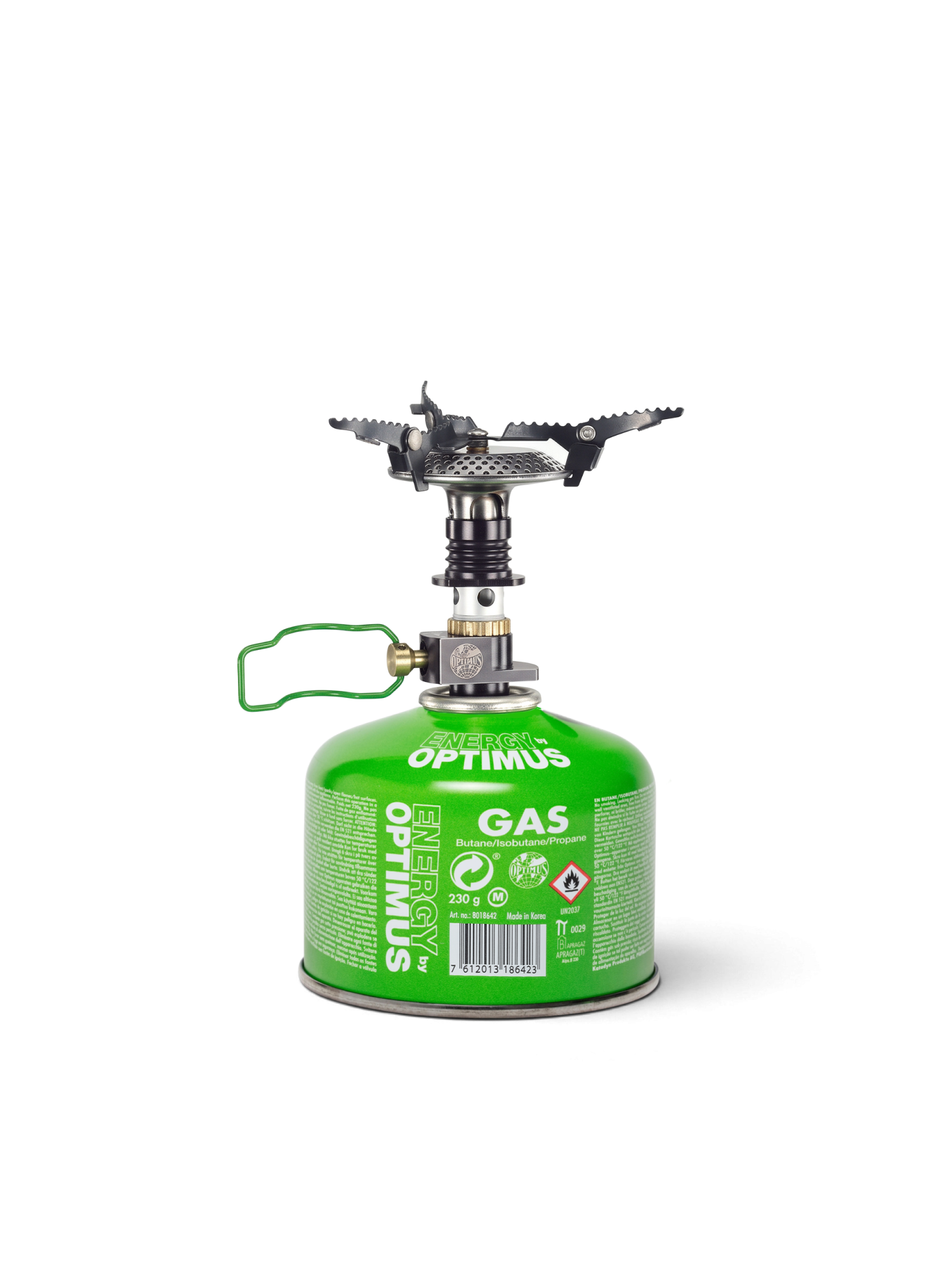
Optimus says the Crux’s burner head folds so the stove can nest into unused cookware space. The official factsheet lists the stove alone at 83 g and gives open dimensions of 76 × 57 × 34 mm. It also gives a folded length of 84 mm, so the compactness is a packing shape advantage rather than a claim that the whole kitchen fits inside the burner. You still need a compatible fuel canister and a pot or pan. The manufacturer photo shows the burner mounted on a separate green canister; that picture does not mean a canister ships with SKU 8019260.
The standard Crux is the folding member of this family. The Crux Lite is a separate, nonfolding stove with a 72 g listed stove-only weight; Optimus describes it as 11 g lighter because it eliminates the folding mechanism. That difference may matter if the stove is carried every day, but the Lite’s head is taller when packed. Neither model includes the other’s physical configuration just because they share product photos or manuals.
Use the specified cartridge and check the seal
The exact product safety note and shared Crux/Crux Lite manual require Optimus gas cartridges that comply with EN 417. The manual describes a butane/isobutane/propane mixture and caps the cartridge at 450 g. The US manual does not give a blend ratio, so do not treat the connection as proof that an MSR 80/20 or Jetboil JetPower canister is the documented fuel. It does not authorize bulk propane, an adapter, or an arbitrary cartridge. Read the label on the specific canister and follow the stove manual.
The manual’s setup is a threaded screw-on arrangement: inspect the O-ring, hand-tighten the correct canister without forcing the thread, check for leaks and set the stove on a horizontal, stable surface. It warns that seals can stiffen below freezing and calls for extra caution in those conditions; the sources do not establish a numeric minimum operating temperature. These are practical constraints, not details to skip in pursuit of the lightest burner figure.
Small pot cooking with an exact accessory limit
Optimus lists 3,000 W, an approximate one-liter boil time of about three minutes, and up to 90 minutes at full output from a 230 g canister. Those are manufacturer specifications; weather, elevation, fuel temperature, pot choice and flame setting change real cooking time. The broad burner description and adjustable valve make the stove a more plausible choice for simple simmering than a fixed-output boil-only burner, but the advertised boil figure is not independent performance evidence.
The manual provides the fit checks that matter more than marketing language: cookware no wider than 220 mm (the manual also prints 8.5 inches), and a combined pot-plus-food mass no greater than 2 kg. It asks for a stable, level position and says not to move the hot stove. The manual’s paired metric and rounded imperial pot sizes do not align perfectly mathematically; for general use without a separate screen, this review retains the stated 8.5-inch ceiling. A pot that fits under that maximum still needs to sit securely on the supports.
Wind protection is unusually specific. A separate Optimus Clip-On Windshield is permitted, but the exact manual says to fit it before lighting, leave about a 10 mm gap from pot to shield and never use a pot wider than 130 mm with it. The 130 mm number belongs only to that windshield arrangement, not to the stove’s general cookware maximum. Because the finder asks for a single cookware ceiling, its Crux-family comparison uses a conservative 5-inch step when screened cooking is required; that does not erase the manual’s larger no-screen ceiling. Optimus prohibits non-Optimus heat reflectors or windshields. If your cooking plan needs a larger shielded pot, this is not a setup to improvise.
Who should consider it?
The Crux suits a walker who wants one compact, adjustable burner, can source the specified cartridge and is happy with a stable small-pot menu. Its folding head makes it easier to pack flat than Crux Lite, but it is still a single flame: it cannot cook two dishes at the same time, and its 83 g figure omits fuel, vessel and accessories. For multiple-pan car camping, this layout is a poor substitute for a wider stove with more cooking positions.
Before buying, confirm the exact 8019260 SKU, the stove-only package, compatible canister, pot diameter and any approved screen. Do not confuse this product with the Crux Lite, the Crux Lite Piezo package or cookware-inclusive Optimus cook systems. The manufacturer’s listing does not provide a confirmed current stock state here, and no price or offer details are assumed. The manual also limits use to an open-air, naturally ventilated setting; keep combustibles clear, inspect seals, never use a stove that leaks or smells of gas, and keep it away from tents, vehicles and enclosed shelters where carbon monoxide can accumulate.
Key specifications
Key details at a glance
| Manufacturer-listed minimum weight | 83 g |
|---|---|
| Burners in one arrangement | 1 |
| Fuel connector | Threaded EN 417 canister connection |
| Specified fuel blend | Butane isobutane propane mix unspecified ratio |
| Maximum cookware diameter | 5 in |
| Push-start ignition | No |
| Adjustable flame | Yes |
| Separate windscreen permitted | Yes |
Use the exact model’s instructions for operating limits, supplied equipment and version differences.
Sources for this review
Sources for this assessment
Compare this stove against your actual setup
Use the finder for a fact-based shortlist, then confirm the exact manual, fuel cartridge and package before use.