
Your needs, this model
Does it fit your priorities?
Which fuel cartridge and maximum size does WindPro II use?
The English manual specifies an MSR 80% isobutane / 20% propane cartridge certified to EN 417, and says never to use a fuel container over 16 oz / 450 g. MSR recommends IsoPro. The canister is not included, so verify the exact blend, threaded fitting, certification and size rather than relying on a generic canister label.
Explore this need in the finder →Does WindPro II have a low-temperature inverted mode?
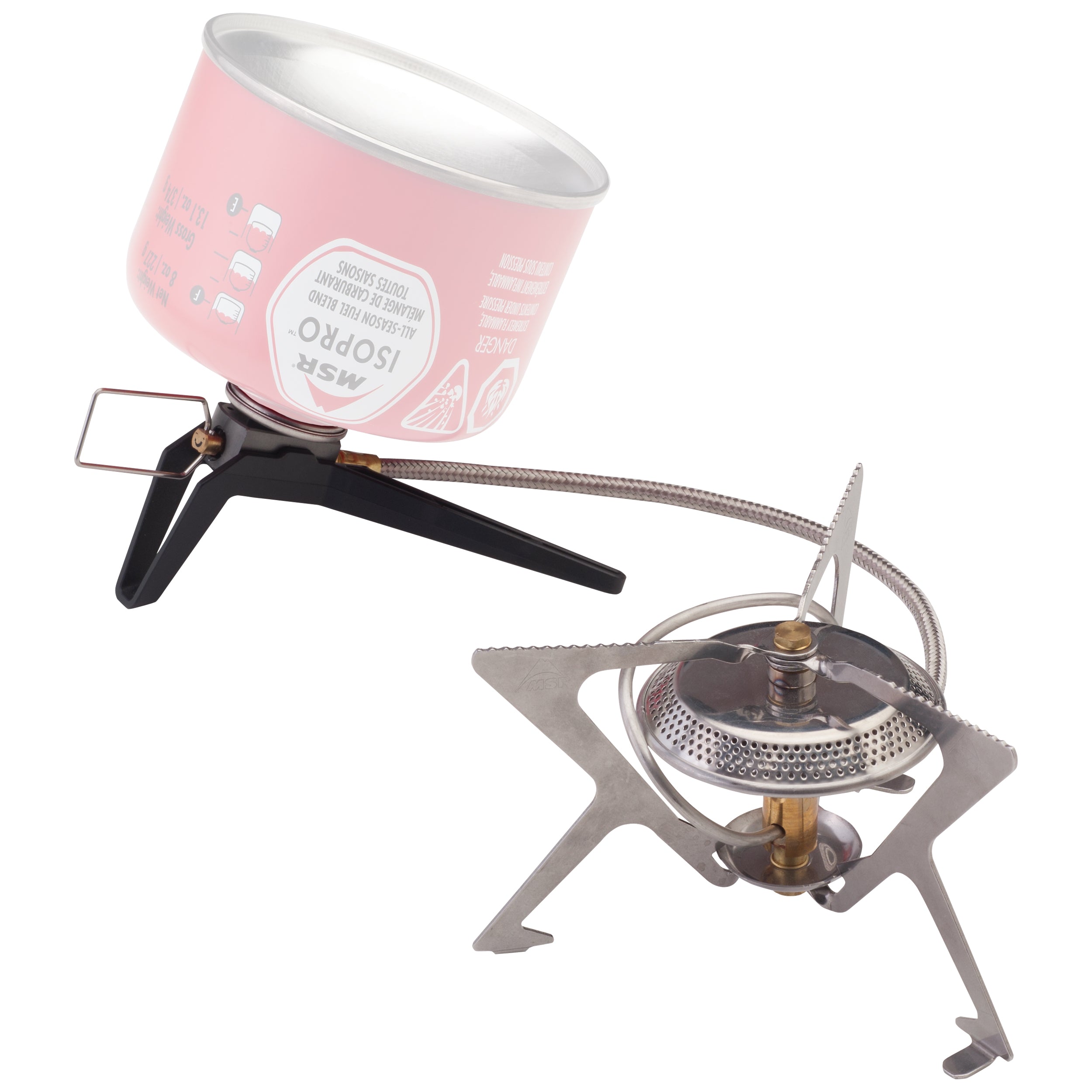
Yes, the manual gives a distinct inverted liquid-feed procedure: start upright, allow about 30 seconds for priming, then support the inverted canister on its stand. MSR describes that mode for very cold conditions or faster/higher-output boiling. The same manual says not to operate or store below 0°F / -18°C, so inversion does not erase the stated limit. Upright vapor feed remains the manual's best-simmer mode.
Explore this need in the finder →What cookware, windscreen and weight boundaries apply?
The exact manual allows a separate windscreen with its stated gap and clear ventilation, and caps cookware at 10 inches diameter, 5 inches high and 8 lb. It lists 190 g minimum and 290 g packaged for the stove, before fuel. Keep the canister away from burner heat and follow the exact setup; the photograph or manufacturer figure is not an independent field test.
Explore this need in the finder →This source-based assessment covers the current US WindPro II Stove, SKU 14046. It is not a field test; we have not measured boil times, weight, cold-weather performance or simmer quality.
A remote canister stove with two distinct feed modes
WindPro II sits between a very small top-mounted burner and a pumped liquid-fuel stove. The canister connects to a remote burner by fuel line, leaving a low burner platform and supporting pots up to the manufacturer’s 10-inch diameter limit. It also differs from most simple canister stoves because MSR documents both upright vapor-feed and inverted liquid-feed operation. The upright mode is the manual’s normal-conditions and best-simmer choice; the inverted mode is for very cold conditions or higher output and faster boiling, after the prescribed startup and preheating sequence.
The exact English manual sets a temperature limit that should not be lost in summaries: do not operate or store the stove below 0°F / -18°C. Inversion does not cancel that restriction or create an all-condition cold guarantee. For liquid feed, the manual says to begin upright, ignite, allow about 30 seconds for priming and then invert the canister onto the included stand. If the stove flares, return it upright for another interval before trying again. This is a procedural difference, not a mode to improvise during a meal.
Fuel and canister checks
WindPro II’s manual specifies an MSR cartridge containing 80% isobutane and 20% propane, certified to EN 417. MSR recommends its IsoPro fuel. The product page says the canister is not part of the stove package, so check the exact threaded fitting, blend and certification on the fuel container rather than assuming a different cartridge, adapter or bulk propane tank will fit. The manual also prohibits fuel containers larger than 16 ounces / 450 grams. Its separate stand is included for the inverted-feed procedure; that does not mean a user should invert another canister stove or use the stand as a substitute for the manual.
MSR lists 190 g as minimum stove weight and 290 g packaged weight. Those manufacturer figures are useful for comparing the stove itself but exclude the fuel canister and food-cooking vessel. The listed 3.6-minute one-liter boil figure and approximate fuel estimates are also maker specifications, not results from our own controlled test. WindPro II is light enough to fall within this finder’s 300 g listed-minimum limit, but that number alone should not be mistaken for a complete trip load.
Cookware and the supplied windscreen
The manual allows the supplied separate windscreen and instructs the cook to leave about a one-inch gap between screen and cookware, with combustion flow and ventilation unobstructed. It limits cookware to 10 inches across, 5 inches high and 8 pounds. The remote burner’s geometry and the canister’s position make stability a separate check: put the assembly on a solid, stable, level surface and keep the connected canister away from burner heat. The screen is not an excuse to enclose the canister or cover the ventilation path.
This setup differs from a top-mounted PocketRocket 2, whose manual limits pots to 8 inches and prohibits a separate windscreen. It also differs from the WindBurner radiant systems, which use matched cookware and do not permit a generic windscreen. WindPro II’s appeal is that it has a remote burner, supports a larger pot and allows the specific included screen while still using a threaded canister. It remains one burner; the 10-inch pot limit does not imply multi-pan cooking.
Choose the operating mode that matches the meal
For ordinary cooking, use the upright vapor-feed setup described by the manual. That is also the mode it identifies as best for simmering. When faster boiling or cold-weather performance is the need, the manual provides the inverted liquid-feed method with the supplied stand and preheating procedure. MSR’s page describes more consistent output at low fuel and improved cold performance, but those are manufacturer claims and remain subject to the manual’s hard limits. We have not tested either mode or established a performance threshold for particular weather, cookware or canister level.
Someone prioritizing an adjustable liquid-fuel simmer might prefer DragonFly, accepting its heavier 401 g minimum weight and its jet, pump, bottle and priming requirements. Someone seeking the XGK EX’s expedition-oriented fuel choices should understand that MSR describes that model as boil-focused, not a simmering stove. WindPro II gives up those multi-liquid-fuel options for a canister system that can be lighter and less involved in normal mode.
What to verify before purchase
Confirm the current US WindPro II model and SKU 14046 / UPC 040818140468; do not confuse it with the original WindPro or a separate canister stand. The current written list includes a windscreen, heat reflector, canister stand, instructions and stuff sack, not fuel. Check the exact package and condition, then read the complete manual for the canister blend, 16-ounce maximum, temperature restriction, cookware limits, screen gap and inverted setup. Its 190 g minimum is not a fueled load, and its 290 g package figure does not include the canister. The fit is strongest for a backpacker who will use the remote layout and two manufacturer-documented modes, not for someone who wants to skip setup or ignore fuel availability.
Sources: MSR’s current US WindPro II page, the WindPro II English instructions, and Cascade Designs’ canister-fuel guidance.
Key specifications
Key details at a glance
| Manufacturer-listed minimum weight | 190 g |
|---|---|
| Packaged weight | 290 g |
| Burners in one arrangement | 1 |
| Fuel connector | Threaded EN 417 canister connection |
| Specified fuel blend | MSR 80% isobutane / 20% propane |
| Maximum cookware diameter | 10 in |
| Fuel canister included | No |
| Pressure regulator | No |
| Push-start ignition | No |
| Adjustable flame | Yes |
| Separate windscreen permitted | Yes |
| Manual's minimum operating temperature | 0 °F |
Use the exact model’s instructions for operating limits, supplied equipment and version differences.
Sources for this review
Sources for this assessment
- MSR WindPro II Stove — current US product page, SKU 14046
- Official US storefront variant and image data for WindPro II Stove SKU 14046
- MSR WindPro II official English instruction manual
- Cascade Designs: Can I use another brand of canister fuel with MSR stoves?
- MSR current cookware notice 24-126, checked as a bounded safety-source review
Compare this stove against your actual setup
Use the finder for a fact-based shortlist, then confirm the exact manual, fuel cartridge and package before use.