
Your needs, this model
Does it fit your priorities?
Which fuel and jet does DragonFly SKU 14096 use?
The exact #33-950 manual pairs the preinstalled DG jet with white gas or unleaded auto gas, and the included DK jet with kerosene, diesel or jet fuel. MSR recommends SuperFuel white gas, prohibits leaded fuel, warns that unleaded auto gasoline may shorten stove life, and says other fuels can require more frequent cleaning. Use the matching jet and the full priming instructions; the fuel bottle and fuel are separate.
Explore this need in the finder →Is the DragonFly a plausible simmering stove?
MSR's DragonFly page describes dual-valve precision flame control, and its support answer calls DragonFly the liquid-fuel model with a fully adjustable flame for simmering. This supports a maker-documented simmer capability, not an independent flame-control test. It remains a one-burner pumped stove that needs priming and the correct jet.
Explore this need in the finder →What pot size, screen and carry figure should I check?
Manual #33-950 sets a 10-inch / 25 cm maximum cookware diameter and instructs use of a separate windscreen, while warning never to put the screen around the fuel bottle or obstruct ventilation. MSR lists 401 g minimum and 506 g packaged weight; neither includes fuel, and the bottle is separate. These are manufacturer figures, not independent measurements.
Explore this need in the finder →This is a source-based assessment of the current US DragonFly Stove, SKU 14096. We have not used the stove, timed a boil, tested simmer quality or measured its mass.
What the DragonFly is built to do
The DragonFly is a remote liquid-fuel burner for a cook who wants a controllable flame and a broad choice of named liquid fuels. MSR describes its dual-valve design as precise from simmer to high heat, while its support material singles this model out from the brand’s other liquid-fuel stoves for fully adjustable simmering. That distinction makes it more relevant to pot cooking than an expedition burner whose practical brief is mostly rapid boiling. It still has one burner and one cookware position: a big support pattern, a pot-and-pan meal or several jet choices do not mean it can heat two pans at once.
MSR lists 401 g as minimum weight and 506 g packaged weight. Those figures are for the stove package, not a full cooking load; the fuel bottle and fuel are separate. The manual’s outdoor-use, priming and pressure-bottle procedures make it a different kind of commitment from threading on a canister and lighting a small top-mounted burner. This is a reason to select it for a particular cooking routine, not a blanket claim that it is a better stove.
Fuel flexibility means exact jet choices
The current US package comes with an installed DG jet for white gas and unleaded automotive gasoline, plus a DK jet for kerosene, diesel and jet fuel. The exact English instructions explain that mapping; they also recommend MSR SuperFuel white gas, prohibit leaded fuel, warn that other fuels may need more frequent jet and fuel-line cleaning, and say unleaded auto gasoline may shorten the stove’s life. Fuel variety is useful only when the right fuel is actually available and the user is willing to set up the matching jet. Do not choose a fuel because a general list elsewhere mentions it; check the exact manual and follow its preparation instructions.
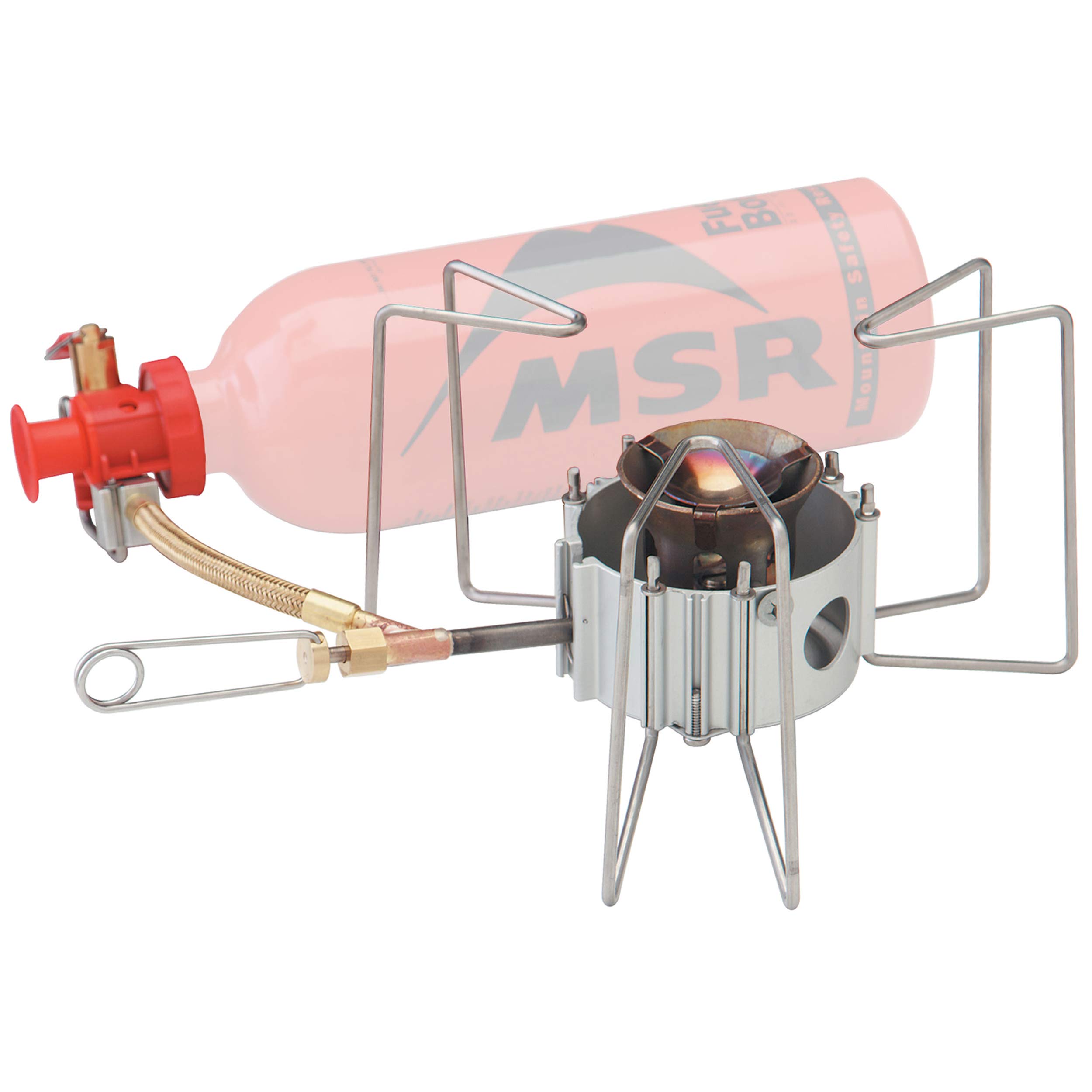
Both documented jet arrangements require a separate pressurized fuel bottle and a priming step. MSR’s package description lists the pump, screen, heat reflector, small-parts kit, instructions and stuff sack, but not the bottle or fuel. The page’s gallery photograph also shows a bottle; that visual is not proof the bottle is in the package. Confirm the exact pump as well: MSR’s product-page support answer distinguishes the DragonFly pump from its standard liquid-fuel pumps. A used stove with a mismatched or damaged pump is not a safe substitute for checking the proper assembly.
Cooking control, cookware and wind
For shoppers who regularly move between steady boiling and lower-heat cooking, the maker-documented adjustable valve is the DragonFly’s standout feature. No independent flame-control comparison or food test is claimed here. MSR’s published estimates give fuel-specific one-liter boil times of 3.5 minutes on white gas, 3.9 on kerosene and 3.5 on diesel, but those are controlled manufacturer figures, not a promise for a particular pot, weather or altitude. The relevant distinction is that the manufacturer identifies the DragonFly as its fine-simmer liquid-fuel choice; that should be weighed against the extra setup and maintenance.
The legs spread around a low, remote burner and MSR says the supports accept pots up to 10 inches in diameter. The manual confirms that 10-inch ceiling and directs users to place the stove on a solid, level surface. It includes a windscreen and allows its use with a gap from the cookware; the screen must never wrap around the fuel bottle, and airflow must remain clear. This is not permission to add an improvised reflector or to ignore bottle separation. For buyers choosing cookware, diameter alone does not establish a safe pot shape or base; heed the manual’s fit and stability cautions.
Weight, noise and maintenance are real tradeoffs
At 401 g minimum and 506 g packaged before the separate bottle and liquid fuel, the DragonFly is not an ultralight choice. MSR itself describes the model as loud, bulky and heavy in its liquid-fuel comparison. That is the manufacturer’s characterization, not our sound measurement. The manufacturer describes field cleaning and a shaker needle, but access to that maintenance is not the same as maintenance-free operation: owners need to identify fuel, maintain bottle pressure, check seals, prime carefully and clean deposits as needed. The manual warns that O-rings may stiffen and leak below freezing, but the sources give no numeric minimum temperature for this supplied-pump setup.
The WindPro II offers a much lighter threaded-canister remote layout with a supported screen and two feed modes, but it does not have DragonFly’s multi-liquid jet range. The XGK EX supports a broader expedition fuel set and is framed by MSR as a boil-focused stove, not a simmering one. WhisperLite variants are lighter than this DragonFly but have different fuel/jet arrangements and only limited pressure-managed simmer capability according to MSR support. These are functional alternatives, not versions with interchangeable parts or instructions.
Who should keep it on the shortlist
The DragonFly makes most sense when fine, adjustable heat and a supported range of liquid fuels matter more than minimum mass, and the cook is prepared to learn priming, bottle handling and jet-specific maintenance. It is a poor match for a shopper seeking instant canister setup, very quiet operation, a sub-300-gram minimum or two simultaneous cooking positions. Before buying, verify US SKU 14096, the correct DragonFly pump, both jets, windscreen, heat reflector and small-parts kit; check that a compatible fuel bottle and the required fuel are available separately; and read the complete manual. Review the exact seller package and condition rather than inferring contents from a photo.
Sources: MSR’s current US product page, DragonFly instructions #33-950, and Cascade Designs’ liquid-fuel simmer guidance.
Key specifications
Key details at a glance
| Manufacturer-listed minimum weight | 401 g |
|---|---|
| Packaged weight | 506 g |
| Burners in one arrangement | 1 |
| Fuel connector | Pressurized liquid fuel bottle pump |
| Specified fuel blend | White gas or unleaded auto gas or kerosene or diesel or jet fuel |
| Maximum cookware diameter | 10 in |
| Fuel canister included | No |
| Pressure regulator | No |
| Push-start ignition | No |
| Adjustable flame | Yes |
| Separate windscreen permitted | Yes |
Use the exact model’s instructions for operating limits, supplied equipment and version differences.
Sources for this review
Sources for this assessment
- MSR DragonFly Stove — current US product page, SKU 14096
- Official US storefront variant and image data for DragonFly Stove SKU 14096
- MSR DragonFly Stove official English instructions, manual #33-950
- Cascade Designs: Can you simmer with an MSR liquid-fuel stove?
- Cascade Designs: What are some of the differences between MSR's liquid-fuel stoves?
- MSR current cookware notice 24-126, checked as a bounded safety-source review
Compare this stove against your actual setup
Use the finder for a fact-based shortlist, then confirm the exact manual, fuel cartridge and package before use.