
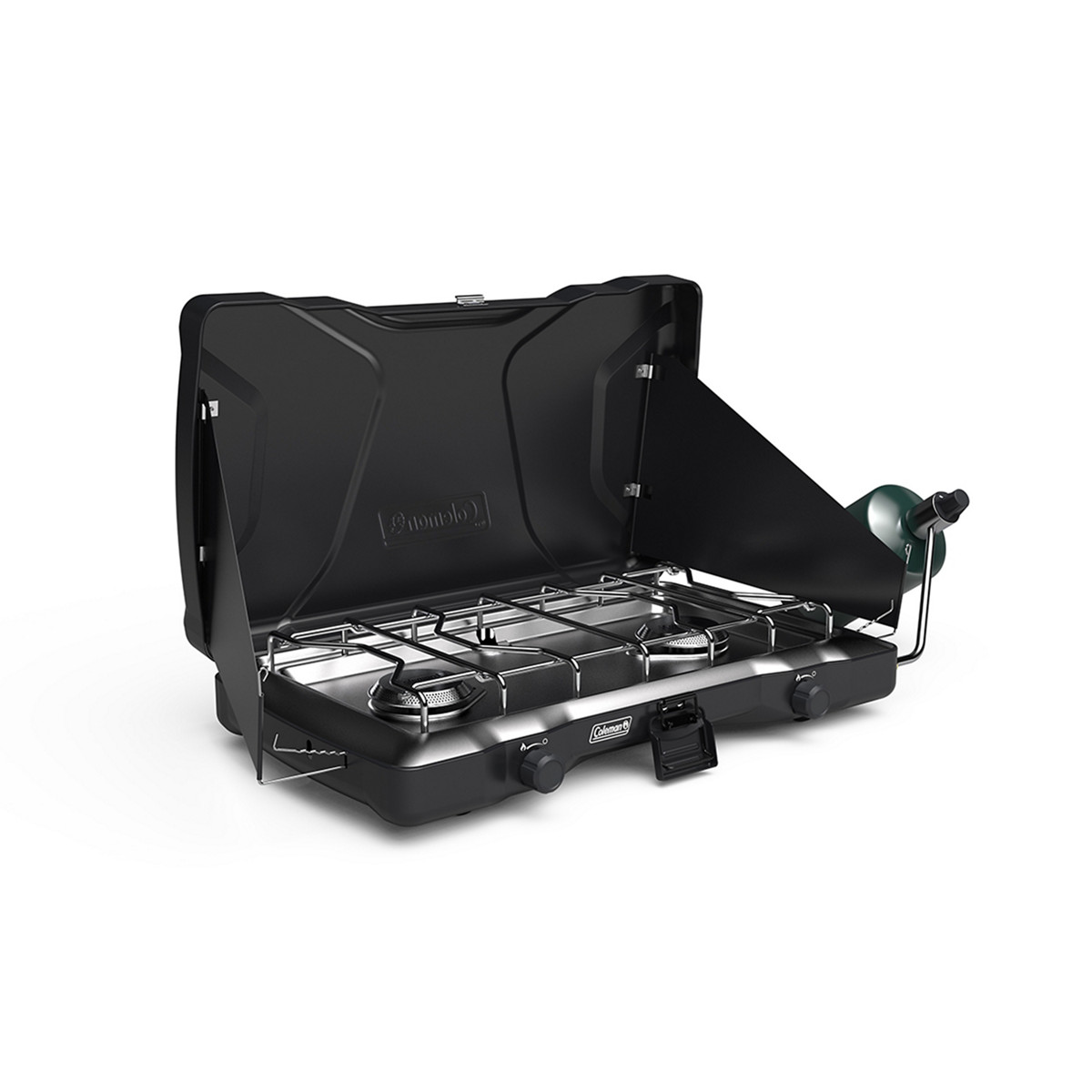
Your needs, this model
Does it fit your priorities?
Does this Triton have a push-button igniter like the Triton+?
No. Coleman lists exact US SKU 2157352 / model 5461 as match flame. Triton+ SKU 2157318 is separately listed with Instastart. Check the full SKU and ignition detail on the exact seller package instead of transferring a feature from the plus edition.
Explore this need in the finder →Can it fit two different cooking vessels at once?
The official page documents one 10-inch pot and one 12-inch pot on the two-burner cooktop. Compare the actual base and handles, because nominal diameter alone does not capture overlap or support geometry.
Explore this need in the finder →Does this model satisfy the exact MSR threaded-canister fuel choice?
No. The 5461-series manual calls for pressure-regulated propane in a 16 oz disposable cylinder, not the MSR 80/20 threaded EN 417 cartridge in the current finder. Do not infer compatibility with a different cylinder or hose from another model's page.
Explore this need in the finder →The reviewed Triton is Coleman model 5461, US SKU 2157352, in black. It is not Triton+ SKU 2157318. That distinction matters because Coleman lists the plus version with Instastart, while the exact 2157352 page identifies match-flame ignition. The linked 5461 Series manual includes both electronic- and standard-ignition directions, but the product page’s SKU-specific listing supports treating this Triton as the match-lit configuration. Check that full SKU before relying on the ignition instructions for an offer.
A two-pan layout, not a serving-size promise
The exact product page documents two burners and says the cooktop fits one 10-inch pot plus one 12-inch pot. That gives a practical starting point for two simultaneous cooking tasks—such as a small pot and a larger pan—without pretending to estimate servings. Handles, pot bases and the table footprint still matter. A pair of wider vessels may overlap even when each is labeled with a diameter that seems close to the listing’s figures.
Coleman describes two independently adjustable burners and improved knob rotation for temperature and simmering control. The manual lists 11,000 BTU/h per burner, or 22,000 total. This makes the burner layout and adjustable controls relevant to a basic boiling-plus-simmering menu, but it is not an independent flame-control or speed test. The page’s “up to one hour on high” statement uses one 16-ounce propane cylinder; real duration depends on conditions and use. Do not read total output as a promise that both burners will reach the same result with a particular pan.
Fuel and ignition are version-specific
The 5461 Series instructions identify pressure-regulated propane and specify 16-ounce disposable cylinders with the preset Coleman 5430 regulator. The current US product page says the cylinder is sold separately and lists a removable grate and two wind guards with the stove. It also identifies match flame, so this model requires a lighting flame rather than the Instastart button on the Triton+. If a button igniter is essential, compare the separate Triton+ SKU and its own package details rather than assuming the models are interchangeable.
Coleman support text for the exact Triton page says a larger refillable propane tank can be used with a compatible Coleman adapter hose. The linked manual’s note says to use only 16-ounce disposable cylinders. Those statements do not line up, so this assessment limits its operating plan to the manual’s 16-ounce setup. Ask Coleman to reconcile the exact instructions before using a different cylinder or hose. Do not connect it to an RV system or improvise a regulator based on an unrelated product page.
The lid has two wind guards, but the 5461 Series manual does not approve a separate windscreen. The guards are part of the stove’s intended layout; they are not a license to enclose a propane burner or add a reflective shield. The manual requires outdoor-only use, a stable flat surface, clearances of 12 inches at the sides and 48 inches above combustibles, checking connections with soapy water rather than a flame, and turning off and disconnecting the cylinder for storage. Follow the complete instructions, including unattended-use and ventilation warnings.
Carry details and small omissions
Coleman lists the Triton at 10.55 pounds and gives dimensions of 23 by 13.75 by 5.75 inches. It does not label that weight as minimum, packaged or fueled, so it should not be compared directly with the bare minimum weights of compact backpacking stoves. The listing specification also says no carry handle; the open lid and latch make it a portable tabletop case, but the handle status is a practical detail to verify in product photos or a seller package. Fuel and cookware are separate carry items, and the controls and metal body still need protection in transit.
A removable grate may help with routine cleaning, but this is a small two-burner cooking appliance, not an oven or grill station. The manufacturer’s directions call for cleaning to prevent grease buildup and fire risk. A camping table, suitable clearance, outdoor space and a correctly matched cylinder are part of the setup rather than optional afterthoughts. No numerical minimum temperature, maximum cookware size beyond the listed layout, or external-screen permission is assigned here.
Comparing Triton with Cascade
Compared with the Cascade 222, the Triton has the same broad two-position role and 10-inch-plus-12-inch pan layout, but its page lists match lighting and no carry handle; the Cascade 222 page lists Instastart and a handle. The Cascade 328 brings a third burner, a documented two-12-inch or three-8-inch arrangement, more total input, and uneven burner ratings. Which arrangement suits a trip depends on cookware and the number of simultaneous tasks, not just the total BTU value. All three use propane and built-in wind guards; their manuals do not establish the finder’s separate-windscreen requirement.
Bottom line: Consider the Triton 2157352 if you need two adjustable positions and can work with match lighting and the stated 16-ounce cylinder instructions. Its official simmer-control and fit statements are useful evidence, but not a substitute for the exact manual or an individual cooking test. Resolve the larger-cylinder support conflict, confirm the exact SKU and package, and plan fuel, cookware and safe outdoor clearance before ordering.
Key specifications
Key details at a glance
| Burners in one arrangement | 2 |
|---|---|
| Fuel connector | Separate propane cylinder; exact connection not confirmed |
| Specified fuel blend | Propane |
| Maximum cookware diameter | 12 in |
| Fuel canister included | No |
| Pressure regulator | Yes |
| Push-start ignition | No |
| Adjustable flame | Yes |
Use the exact model’s instructions for operating limits, supplied equipment and version differences.
Sources for this review
Sources for this assessment
- Coleman Triton 2-Burner Propane Camping Stove, current US listing model 5461 / SKU 2157352
- Coleman official 5461 Series propane stove instructions, linked from SKU 2157352 page
- Coleman US product-page support answers for exact model 5461 / SKU 2157352; read with the linked manual
- Coleman US camping-stoves parent listing, observed segment before its More Results control
Compare this stove against your actual setup
Use the finder for a fact-based shortlist, then confirm the exact manual, fuel cartridge and package before use.